


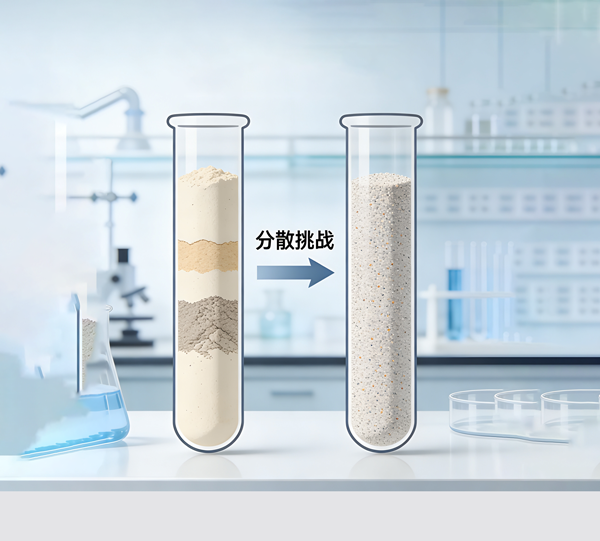
Problem Manifestation: Obvious stratification of materials after mixing, with heavy particles sinking and light powders floating. Ultra-fine powders (above 1000 mesh) float and agglomerate. Trace elements (addition rate ≤1%) are locally concentrated, leading to large batch-to-batch product variations and substandard performance. For example, uneven mixing of salt particles and chili powder in the food industry affects taste, while unbalanced mixing of sulfide electrolytes in new energy materials leads to a decline in ionic conductivity.
Cause Analysis: Traditional mixers rely on a single mixing trajectory and cannot overcome the segregation problems caused by differences in particle gravity, electrostatic attraction, and extreme flowability (either too good or too poor). The equipment has mixing dead spots where trace elements easily accumulate.
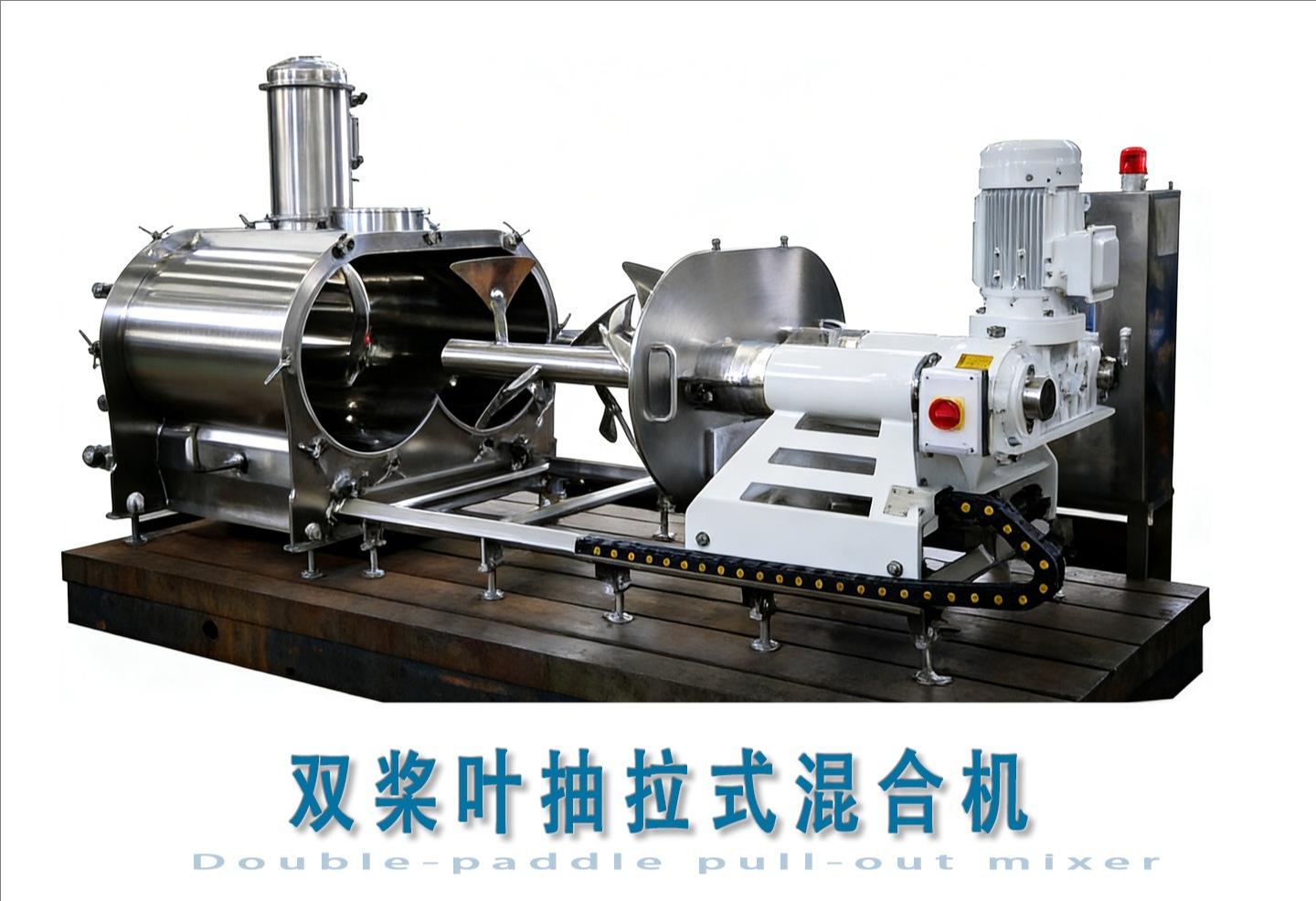
Solutions Offered by the Pull-Out Paddle Mixer:
Dual-Shaft Counter-Rotating Design: Two mixing shafts rotate in opposite directions, driving materials to form a three-dimensional cycle of horizontal pushing and vertical flipping. Light powders are forced to infiltrate the heavy powder system, achieving mixing uniformity of over 99%.
Full-Volume Coverage Paddles: The gap between the blades and the chamber body is only 2-3 mm, eliminating mixing dead spots. Combined with the shearing action of serrated blades, it breaks up electrostatic agglomerates of ultra-fine powders and ensures the dispersed distribution of trace elements.
Adaptation to Special Processes: For metal powders with excessively good flowability, the blades knead the material to reduce particle flowability and avoid secondary segregation. For materials with poor flowability (angle of repose ≥40°), forced shear displacement achieves homogeneous mixing.

Top







 location:
