


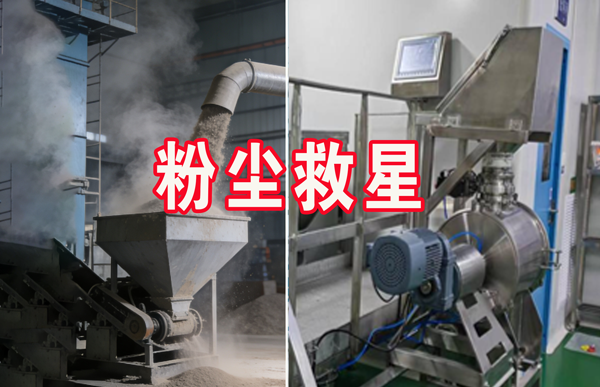
Material feeding is the first critical process in milk powder production, undertaking the core task of accurate and clean feeding of base powder, nutrients, additives, and other raw materials. Although easily overlooked, it directly determines production line efficiency and the stability of milk powder quality. Due to the characteristics of milk powder materials and the strict production environment, feeding equipment often encounters various problems during operation. Only by balancing professional management and practical implementation can the first checkpoint of production be secured.
I. Dust Emission: A Chronic Workshop Problem – Dust Removal is Key
Milk powder is fine and light, easily becoming airborne when bags are opened and materials are fed. This not only causes material waste and pollutes the workshop environment but also harms operator health and can even lead to equipment failure and dust explosion hazards.
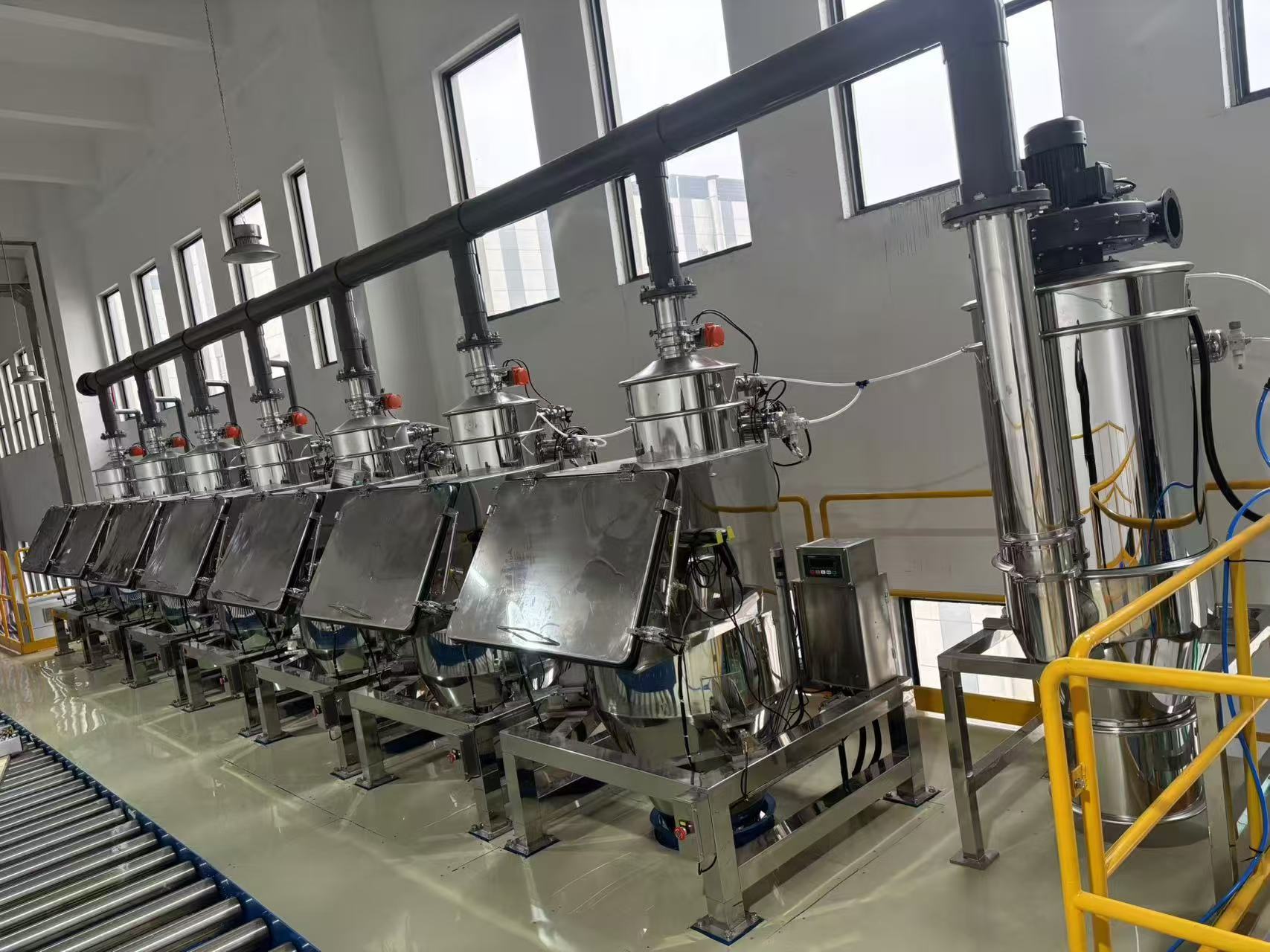
Solution: A dust-free feeding station equipped with a dust removal system is standard. Regularly clean or replace clogged filter cartridges to maintain suction. During commissioning, match the dust removal air volume and optimize the suction port position to prevent dust from escaping at the source.
II. Bridging and Blockage: Material Jamming – Break Arches and Clear Pipes Simultaneously
Raw materials that have absorbed moisture and caked can easily form a bridge in the hopper, causing flow interruption. Rough inner pipe walls and elbows that are too small can also accumulate material and cause blockages, affecting efficiency and creating safety risks.
Solution: Install a vibratory arch breaker on the hopper and ensure the hopper angle is not less than 60 degrees to promote free flow. Use smooth stainless steel pipes and large-radius elbows to reduce deposition. Strictly control raw material moisture prevention, and sieve caked raw materials before feeding.
III. Vacuum Powder/Milk Loss: A Common Vacuum System Issue – Fine-Tune Control to Stop Losses
At the end of vacuum feeding, when the hopper is nearly empty, sudden changes in vacuum level can occur, causing mixed material to be sucked into the vacuum pump, resulting in material loss and equipment contamination.
Solution: Slow down the powder suction speed, optimize valve timing sequences, and set low-level alarms. High-end equipment can be equipped with anti-powder-loss devices that use staged speed reduction controls to solve the problem through both hardware and software.
IV. Foreign Matter Contamination: A Food Safety Red Line – Prioritize Interception and Inspection
Packaging debris, metal contaminants, and other foreign matter can easily mix with raw materials, directly threatening the safety of milk powder for consumption.
Solution: Install screens at the feed inlet to intercept clumps and debris, and magnetic grates to adsorb metal contaminants. Inspect screen integrity daily and clean the magnetic grates promptly to avoid secondary contamination.
V. Sanitary Dead Spots: Microbial Control – Achieve Closed-Loop from Design to Cleaning
Microorganisms can easily breed in equipment gaps and welding dead spots, potentially leading to the rejection of entire batches of product.
Solution: Choose food-grade stainless steel equipment with polished, dead-spot-free surfaces that is easy to disassemble and clean. Ensure flanges and welds are sealed and smoothed. Implement strict cleaning procedures, with detachable parts thoroughly cleaned separately.
VI. Equipment Wear + Improper Operation: Detail Neglect – Backed by Maintenance and Training
Wear and tear on vulnerable parts such as damaged flexible connections and aging valve seals, combined with improper bag opening, feeding, and material changeover procedures, can cause problems like powder leakage and cross-contamination.
Solution: Conduct daily focused inspections of vulnerable parts such as vibration motors and seals, and perform timely maintenance and replacement. Strengthen operator training, standardize bag opening and feeding procedures, and eliminate human errors.
Summary
Feeding is the first line of defense in milk powder production. From dust control and blockage clearing to foreign matter interception and sanitary maintenance, every link requires professional technical support and precise practical execution. A well-managed feeding process lays a solid foundation for subsequent production and continuously ensures the stability of milk powder quality

Top







 location:
