


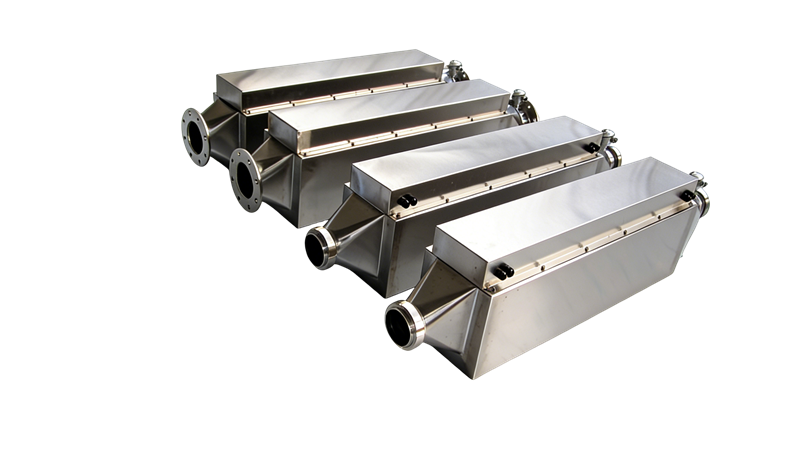
Throughout the entire milk powder production process, the fan heater plays a role that is both unassuming and absolutely critical. It may not be as imposing as the spray drying tower, nor does it interact directly with consumers like the packaging machine, but it serves as the “thermal heart,” providing a continuous stream of heat energy for drying, fluidization, conveying, and other key steps. From transforming liquid milk into fine powder to ensuring the safe transfer of the finished product, the fan heater works tirelessly behind the scenes.
Demanding Heat Requirements in Milk Powder Production
The demand for hot air in milk powder production is both comprehensive and stringent. The most critical application is, without a doubt, the spray drying stage. Concentrated liquid milk is atomized into fine droplets from the top of the drying tower and comes into instant contact with high-temperature hot air. The moisture evaporates rapidly, and within seconds, the droplets transform into dry milk powder particles. During this process, the temperature, flow rate, and stability of the hot air directly impact the solubility, particle morphology, and nutritional retention of the final product. Fluctuations in hot air temperature can lead to scorched powder or insufficient drying, compromising the quality of an entire batch.
Beyond spray drying, the fluidized bed cooler/dryer also relies heavily on the fan heater. The powder exiting the drying tower is still relatively hot and must be further cooled and dried in the fluidized bed. Simultaneously, agglomeration occurs here to improve the powder's solubility. In this stage, air that has been precisely heated and filtered passes through the powder layer on the fluidized bed, removing excess moisture to achieve the ideal final moisture content.
The fan heater also plays a vital role in the powder conveying pipelines and pneumatic conveying systems. To prevent the powder from absorbing moisture and caking during transport, the conveying air is typically heated to maintain a specific temperature and low relative humidity. In production lines with exceptionally high hygiene standards, compressed air is also heated and treated to ensure there is no risk of microbial contamination.
How the Fan Heater Works
So, how does a fan heater work? Its principle is simple yet ingeniously designed. The system primarily consists of three components: a blower, a heating element, and a control circuit. When powered on, the blower draws in external air and forces it over the heating element. Inside, the heating element typically consists of spirally arranged heating wires, often made from high-grade nickel-chromium (NiCr) alloys. Cold air passes uniformly over the inner and outer surfaces of the heating wires, undergoing thorough heat exchange. The temperature rises rapidly, and stable hot air is discharged from the outlet.
For precise temperature control, a thermocouple (typically Type K) is installed at the air outlet. It continuously measures the outlet temperature and sends a feedback signal to the temperature controller. Based on the set temperature value, the controller uses a solid-state relay to regulate the heating element’s operation, achieving PID closed-loop control. This method provides high precision, keeping temperature fluctuations within a very narrow range to meet the demanding requirements of milk powder production.
In addition to the core heating function, fan heaters are equipped with multiple safety protection features. An over-temperature protection device automatically cuts off power if temperatures become abnormal, preventing equipment damage or fire hazards. Blower overload protection prevents the motor from burning out due to prolonged overloading. Some units feature dry-run protection: if the blower fails and heat dissipation is insufficient, the heater automatically stops to prevent the heating wire from melting due to overheating. For PTC (Positive Temperature Coefficient) type heaters, they offer inherent self-regulating characteristics. If the blower fails, the PTC element experiences reduced heat dissipation, causing its power output to drop dramatically. Unlike traditional heating tubes, it will not glow red, offering superior safety.
Key Selection Considerations for Food Industry Applications
In food industry environments like milk powder production, selecting the right fan heater involves special considerations. Foremost is the quality of air that contacts the material. Heating elements are typically made from non-magnetic nickel-chromium wire. Using this to heat air provides a clean, hygienic heat source without generating exhaust fumes or off-odors, fully complying with food production environmental requirements.
Durability and reliability are also paramount. Milk powder production lines often operate continuously, year-round. Therefore, the heating core must feature a low air-resistance, vibration-resistant design to maintain stability under extended operation. The housing and inner chamber are typically constructed from stainless steel, featuring a smooth surface for easy cleaning and resistance to the humid conditions encountered during plant wash-downs.
The quality of the heating element directly impacts the equipment’s lifespan. High-quality industrial fan heaters utilize 2080 nickel-chromium wire for the heating element. The wire is suspended within ceramic channels, allowing hot air to flow evenly around it. This design ensures high airflow with minimal resistance, keeps the heating wire surface temperature lower, and extends its lifespan. In contrast, inferior heating tubes often use iron-containing heating wires that oxidize and burn out quickly, resulting in a much shorter operational life.
Common Issues and Troubleshooting
In practical applications, operators should be aware of some common issues. For instance, if the temperature rises slowly or fails to reach the set point, it could be due to scale buildup on the heating tubes or dust accumulation in the air ducts, requiring regular cleaning and maintenance. Uneven temperature distribution may indicate abnormal blower speed or an issue with the arrangement of heating tubes, necessitating a check of the blower speed controller and heating tube operation.
Frequent tripping of the residual-current circuit breaker or a feeling of electrical charge on the housing is a serious safety hazard, usually caused by damaged insulation on the heating tubes or aging wiring. If this occurs, the equipment must be shut down immediately for inspection and repair, with damaged components replaced, ensuring proper grounding.
A blower that fails to operate or delivers weakened airflow is another common issue. Causes can include motor burnout, bearing wear, or debris obstructing the blades. Given that minute amounts of dust are inevitably present in milk powder plant air, dust can accumulate on the blades over extended operation, affecting balance and airflow. Regular inspection and cleaning are essential.
A discrepancy between the temperature displayed on the controller and the actual temperature can compromise process control. This may be due to improper temperature sensor placement, a damaged sensor, or an aging controller. The solution involves re-securing the sensor in the correct position or replacing the faulty component to ensure temperature control accuracy.
Maintenance Best Practices
Several key points should be emphasized for routine maintenance:
Air Filter: Clean or replace the air intake filter regularly to prevent clogging and ensure proper airflow.
Internal Dust: Periodically blow out accumulated dust from inside the heater to maintain heat exchange efficiency.
Electrical Connections: Regularly inspect electrical terminals for looseness to prevent contact failure and potential faults.
Heating Element Aging: For older, long-running equipment, monitor the performance of the heating element and replace it when it reaches the end of its service life.
Conclusion
From simple electric wire heating in the past to today's intelligent hot air systems integrating PID control, multiple safety protections, and remote communication capabilities, the technological advancement of the fan heater provides a solid guarantee for stable milk powder production. It is the “thermal heart” of the milk powder line, safeguarding the birth of every milk powder particle with its continuous, stable stream of heat.

Top







 location:
